|
|
|
|
|
|
|
|
|
|
|
|
|
|
 Introduction Introduction |
||
|
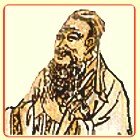
Confucius |
 |
||
|
The first and most notable is CONFUCIUS (K'ung Fu Tzu), who was born in 551 B.C. and died in 479 B.C. in the state of Lu. |
|||
 |
|
| Confucianism |
||
| The principles of Confucianism are contained in 6 different ancient classical Chinese books: |
||
Ng King (Five Classics)  |
||||||
| 1) Yi King |
 |
4) Chun Chau |  |
|||
| 2) Si King |
 |
5) Lai Kay |  |
|||
| 3) Shui King |
 |
|||||
Say Sue  |
||||||
| His Teaching |
||
"Ren" (love and humanity)  is the major teaching in Confucianism. is the major teaching in Confucianism.Confucius said: "Respect others will gain respect in return." |
||
Lun Yu  |
||
|
This is the collection of Confucius teachings which form the basic philosophy. |
||
 |
|
Mang Tzu  (Confucius's follower) (Confucius's follower) |
||
|
Confucianism was interpreted and shaped by many sages and philosophers over the years. The best known of these, and the only other historical figure to have his name Latinised, was MENCIUS (Mang Tzu) who was born in 371 B.C., in the province now known as Shan-dong, and died in 289 B.C. He was taught by descendents of Confucius's followers and closely followed Confucian philosophy, particularly the statement "only good men should rule and that the ruler's right to rule is a mandate of heaven." |
||
|
|
|
|